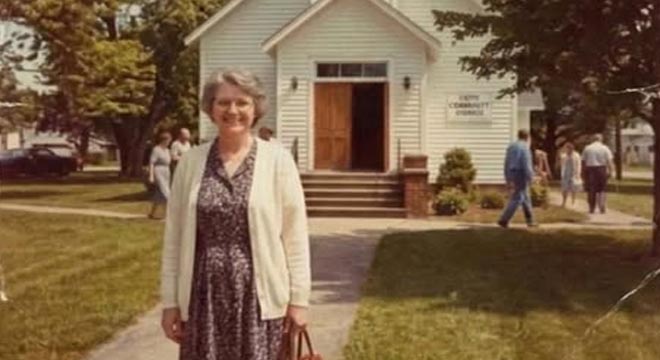
My grandmother, Eleanor, spent nearly fifty years serving the same church. She wasn’t a board member or some important official. She was the woman who showed up early, stayed late, and did whatever needed doing without ever expecting applause. She cooked for church dinners, helped with youth events, organized bake sales, delivered food to grieving families, and donated money she could barely spare. If the church needed hands, she was there. If someone was sick, she visited. If there was a fundraiser, she was somehow already in the kitchen folding napkins or making sure extra chairs had been set out. She believed in serving quietly, and for decades, she did exactly that.
Then, when she was seventy-three, everything changed. A car accident left her with a broken back, and after that she could no longer attend services. At first people stopped by. A few brought casseroles. A few sent cards. But the visits thinned out, then stopped altogether. My grandmother never complained, but I watched her sit by the window on Sundays, listening to church on the radio, her face soft with longing. She still called people to check on them. She still remembered birthdays. She still prayed for everyone she had helped. But for nearly ten years, the church she had served so faithfully seemed to forget she existed.
- My Daughter in Law Gave Me a 2 Scratch Ticket for My 73rd Birthday She Never Knew It Was Worth Millions
PART 3I slowly set down my coffee. “I know what?” He pointed to the signature. “T&E Property Holdings.” I […]
- Lady Slammed Me for My Crying Baby at a Grocery Store, She Turned Red When She Heard My Reply
A man noticed a lady following him in the grocery store for a few minutes. He had gone there to grab some stuff with […]
When she entered hospice care, everyone knew the end was near. That was when the church finally sent someone. The pastor came to her bedside, polite at first, thanking her for her years of service and asking a few questions about the funeral. My grandfather sat beside her, holding her hand, already wary. Then the pastor started talking about the future of the church, about faithful members who remembered it in their wills, about legacy and generosity and heavenly rewards. My grandfather told him gently that this was not the time. The pastor apologized, but only for a moment. A few minutes later, he brought up donations again. Then wills. Then stewardship. Then the church’s needs. My grandmother—who had faced pain, loss, and illness without ever shedding a tear in front of us—started crying right there in her hospice bed. My grandfather had enough. He stood up, took the pastor by the arm, and showed him the door.
Everyone assumed she would die within weeks. Instead, my grandmother lived another eight months. I think part of it was her stubbornness, and part of it was that she had unfinished business. During those months, she met with her lawyer more than once. Whenever we asked what she was doing, she’d smile and say, “Making sure nobody forgets what matters.” When she finally passed, the entire family gathered at the lawyer’s office for the reading of her will. The room was packed with children, grandchildren, cousins, aunts, and uncles. And sitting right in the front row was the pastor, looking calm and almost pleased, as if he expected the church to be richly remembered.
The lawyer began reading through the usual gifts first—small inheritances for family, donations to charities, a few specific keepsakes for her grandchildren. Then he reached the line about the church. The pastor straightened in his chair. I remember the exact moment his confidence started to slip. The lawyer adjusted his glasses and read aloud, “To the church I faithfully served for nearly fifty years, I leave one dollar.” A few people gasped. The pastor blinked like he had misheard. Then the lawyer continued, because my grandmother had left instructions that a letter be read in full.
The letter was classic Grandma—graceful, sharp, and impossible to ignore. She wrote that she had spent decades serving that church because she believed in helping people, not because she wanted recognition. She wrote that she understood people get busy, that life changes, that people drift. But then she explained exactly what had happened when she was dying and the pastor came to her bed talking about money after being asked to stop. She didn’t insult him. She didn’t rant. She simply wrote the truth with enough calm that it cut deeper than anger ever could. Then came the last line of the letter, the one that made the pastor’s ears turn bright red: the one dollar was to be used to buy a sympathy card for the next elderly church member who became too sick to attend services—so perhaps someone would remember to visit before discussing the will.
The room went dead silent. Then my uncle made a noise like he was trying not to laugh, and suddenly half the family was blinking back tears or shaking with the effort not to grin. The attorney kept reading. Instead of leaving the church a large gift, my grandmother had established a foundation worth $850,000 to support elderly and disabled people in the community—transportation, home visits, meal deliveries, companionship, and emergency help, whether or not they ever stepped foot in that church. She named it The Eleanor Grant Outreach Foundation. Her final note said that faith meant very little if it only appeared during fundraising season. She wanted people cared for when they were lonely, hungry, or sick—not when they were useful to someone’s budget.
My grandfather rose slowly when the reading ended and looked straight at the pastor. “You wanted her money,” he said quietly. “Instead, she used it to do the work the church forgot how to do.” The pastor left without another word, and nobody stopped him. Years later, the foundation is still helping people. Meals are delivered. Rides are provided. Volunteers check on elderly neighbors who might otherwise be alone. And every time I see the foundation’s name, I think of my grandmother lying in hospice, crying because the church she had served her whole life couldn’t spare compassion for one visit. They wanted her money. Instead, she made sure her last gift was to the people they ignored. And somehow, even in death, she still found a way to make them remember her.