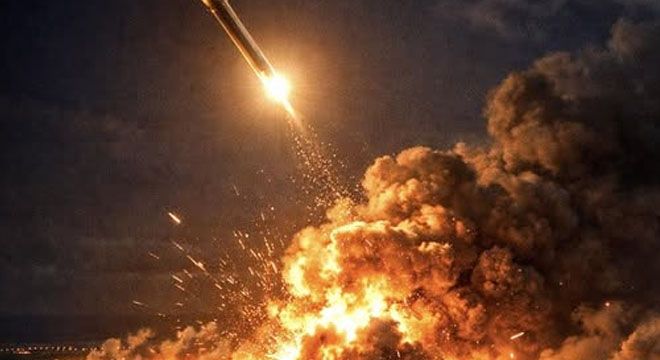
The warning was blunt: “Some people will die.” The president said it on camera, and millions felt the floor drop. As fears of World War III and nuclear fire spread from Kyiv to Tehran to Washington, one terrifying question hangs in the air: where, if anywhere, is it safe in the United States when the sirens star
The uncomfortable truth is that America’s “safest” places are defined not by beauty or comfort, but by whether they matter to a missile planner studying a map in the dark. Analysts point to vast stretches of the East Coast and parts of the Midwest that, while densely populated, lack nearby nuclear silos or critical launch facilities. Maine’s forests, Vermont’s hills, and even crowded coastal states like New Jersey or Florida may face fewer immediate strikes than the lonely plains of the Upper Midwest.
- My Daughter in Law Gave Me a 2 Scratch Ticket for My 73rd Birthday She Never Knew It Was Worth Millions

PART 3I slowly set down my coffee. “I know what?” He pointed to the signature. “T&E Property Holdings.” I […]
- Lady Slammed Me for My Crying Baby at a Grocery Store, She Turned Red When She Heard My Reply
A man noticed a lady following him in the grocery store for a few minutes. He had gone there to grab some stuff with […]
By contrast, the quiet fields of Montana, Wyoming, the Dakotas, Nebraska, Colorado, Iowa and Minnesota sit near the hardened silos designed to unleash retaliation. In a true nuclear exchange, those silos become bullseyes. Yet experts warn that any sense of safety is fragile, even illusory. With thousands of warheads in existence and cities, ports and bases on every coast, the harsh conclusion remains: some places may be hit later, but nowhere is truly beyond the reach of war.