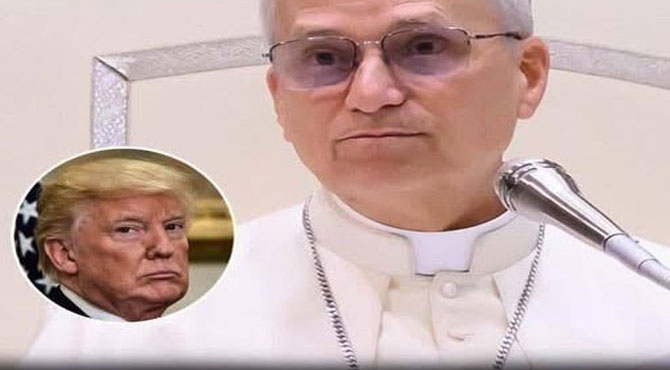
In the rapidly evolving digital landscape of 2026, where political discourse is often characterized by exhausting verbosity and carefully focus-grouped rhetoric, the papacy of Leo XIV has introduced a startling new economy of language. On March 1, 2026, the global media cycle was arrested by a single word posted from the pontiff’s official account. Responding to a query regarding the challenges currently facing the United States and the broader Western world, Pope Leo XIV—formerly known as Cardinal Robert Francis Prevost—replied with a solitary, unsettling word: “Many.”
This viral interaction has done more than just trend on social media; it has functioned as a theological and political “x-ray,” exposing the raw nerves of contemporary society. In an era where leaders often over-explain to the point of obfuscation, Leo XIV’s brevity stood out as a masterfully crafted provocation. It was a signal that the Vatican remains not only acutely aware of the complexities of the American experience but is also prepared to address them with a moral seriousness that transcends partisan soundbites.
- I Cried at My Daughter’s Grave Every Sunday for a Month – Then the Cemetery Groundskeeper Told Me, ‘Please Don’t Cry. You Don’t Know the Whole Truth About Your Daughter’

I cried at my daughter’s grave every Sunday for a month before Otis, the cemetery groundskeeper, finally stopped […]
- I demanded to check my MIL’s bags before she left my house — what I discovered INSIDE made my blood boil.

I’m 29F, a preschool teacher, and I’ve been married to Tyler (31) for almost three years. From day one, his mom, […]
The Architect of Modern Moral Clarity
To understand the weight of this one-word message, one must look at the man behind the ring. Before ascending to the Chair of St. Peter, Robert Francis Prevost was a figure defined by his vocal and often courageous advocacy for the marginalized. As the former head of the Dicastery for Bishops, he developed a reputation for prioritizing pastoral care over bureaucratic rigidity. His history is deeply rooted in the defense of migrant rights and a rigorous application of social justice principles that frequently put him at odds with the political establishment in Washington.
Leo XIV’s previous criticisms of the policies of the second Trump administration—particularly those concerning immigration and the deportation of international students—established him as a leader willing to confront secular power in the name of human dignity. For this Pope, the defense of a migrant is not a political talking point; it is a non-negotiable theological imperative. By responding with “Many,” he was not deflecting a complex question, but rather opening a cavernous door to a discussion about the sheer volume of societal fractures he observes from the Vatican.