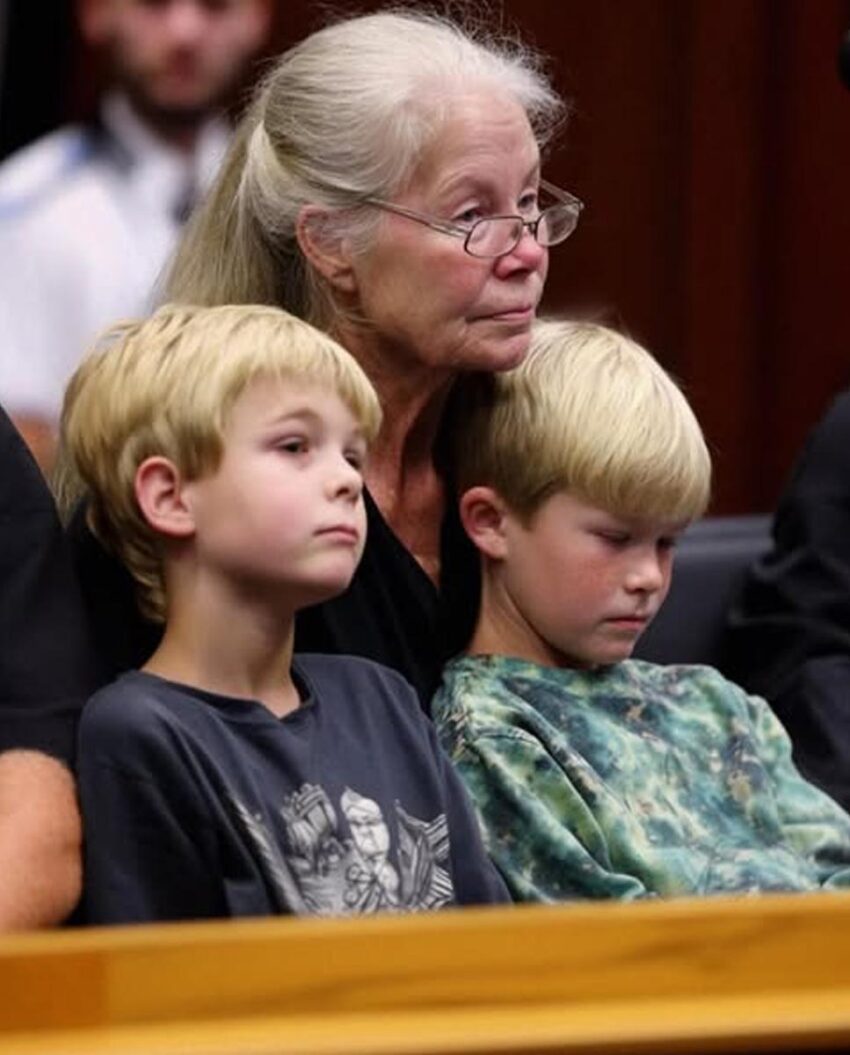
I’m seventy-three years old now, and there are some memories that never stop hurting no matter how much time passes. Ten years ago, two police officers knocked on my door at two in the morning and told me my only son, David, had died in a car accident. The road had been wet, they said. He lost control of the vehicle and hit a tree. I remember the room spinning as soon as I heard it, because David had been my whole world for so long. His wife, Vanessa, survived with barely a scratch. At the funeral, she cried beautifully, held people’s hands, and looked like a grieving widow. I wanted to believe her. I wanted to believe everything was still somehow survivable.
Two days after the funeral, she came to my house with my grandsons. Jeffrey and George were only two years old then, standing on my porch in little pajamas, each clutching a toy animal with sleepy, confused faces. Behind them sat a black trash bag stuffed with clothes. Vanessa shoved it toward me and said, almost casually, “I’m not cut out for this poverty stuff. I want to live my life.” Then she got back into her car and drove away without looking over her shoulder once. I stood there in the doorway holding those babies while they cried, and I remember thinking that something in me had just split clean in half. I raised them from that day on. I worked double shifts, sold homemade tea blends at farmers’ markets until the little side hustle became a real company, and built a life for those boys from nothing. They became my children in every way that mattered. We were finally safe.
- My Daughter in Law Gave Me a 2 Scratch Ticket for My 73rd Birthday She Never Knew It Was Worth Millions
PART 3I slowly set down my coffee. “I know what?” He pointed to the signature. “T&E Property Holdings.” I […]
- Lady Slammed Me for My Crying Baby at a Grocery Store, She Turned Red When She Heard My Reply
A man noticed a lady following him in the grocery store for a few minutes. He had gone there to grab some stuff with […]
Then, three weeks ago, Vanessa showed up at my gate with a lawyer beside her. She didn’t ask about the boys. She didn’t ask how they were doing, whether they were healthy, whether they were happy, or whether they even remembered her. She handed me custody papers and said she wanted full custody of her sons. Later that same day, she cornered me in the kitchen and got straight to the point. She knew exactly what my company was worth. “Sign over fifty-one percent of the business,” she told me calmly, “and I’ll drop the case. If you refuse, I’ll take the boys and move out of state.” I told her to leave, but inside I was terrified. I already knew how courts sometimes look at these things. Biological mother. Second chance. Fresh start. All the words they use when they want to ignore ten years of abandonment.
At the hearing, Vanessa put on a performance so polished it almost made me sick. She cried about regret, about mistakes, about wanting to reconnect. She said she had been young and overwhelmed, that she had changed, that she finally wanted to be in her sons’ lives. Then she turned to the judge and said I was too old to care for them safely, that they needed “stability,” as if I hadn’t been the only stability those boys had ever known. I could see the judge beginning to soften, and every word she said felt like it was pulling the floor out from under me. I sat there trying to breathe through the panic, my hands folded so tightly in my lap they hurt. Then Jeffrey stood up.
He has always hated speaking in front of people. In school, he’d freeze if a teacher called on him unexpectedly. If anyone looked directly at him, he’d blush and look at his shoes. But that morning he got up from the bench, and George immediately stood with him, like they’d already decided they were going together. The twins walked to the center of the courtroom side by side, and Vanessa smiled the smile of someone who thought she was about to win. The judge looked surprised. “Do you have something you’d like to say?” he asked. Jeffrey nodded once, took a breath, and then turned to face Vanessa instead of the judge. He looked right at his mother, and with a voice that shook only at the edges, he said five words that made the entire room go still: “You abandoned us like trash.”
No one moved. Nobody even seemed to breathe.
Vanessa’s face changed instantly. She looked stunned first, then alarmed, then suddenly small. Jeffrey didn’t stop. He said he remembered being two years old on my porch, remembered the dinosaur toy George had clutched, remembered the trash bag of clothes, and remembered Vanessa leaving them there crying. George stepped forward then and said he remembered too. He didn’t speak much, but when he did, his voice was steady in that way children get when they’ve been carrying something too heavy for too long. “You missed everything,” he said. “Grandma came to every game. Every doctor visit. Every birthday. You didn’t.” The judge watched them carefully, and I could see the entire shape of the room change as their words settled over everyone there.
Then George reached into his backpack and pulled out a thick stack of cards. Birthday cards. Christmas cards. Handmade notes with crooked letters and little drawings inside. He placed them on the table in front of the judge and explained that he and Jeffrey had written them for Vanessa every year for six years, just in case she ever came back. Every card had asked a version of the same question: why didn’t she love them anymore? By the time George finished, even I had tears streaming down my face. The judge opened one of the cards, read it silently, and his expression hardened in a way I had never seen from him before. Vanessa was staring at the floor now, her face pale, her entire performance collapsing around her.
The hearing didn’t last much longer after that. The judge denied her custody request and gave me permanent legal guardianship protections strong enough to keep her from trying again easily. He spoke with a kind of quiet firmness that felt like justice at last. Vanessa didn’t fight on the way out. She didn’t even look at the boys. And when it was over, Jeffrey and George crossed the courtroom and wrapped their arms around me so tightly I could barely breathe. Jeffrey buried his face in my shoulder and said, “We’re not going anywhere.” George nodded hard, his eyes bright with tears, and added, “We’re yours.”
I held them there in the middle of that courtroom, surrounded by silence that finally belonged to the right people. Ten years ago, a woman had dumped those boys on my doorstep with a trash bag full of their belongings and left them behind without hesitation. And that day, in front of a judge, a courtroom full of strangers, and the mother who had abandoned them, they made sure everyone understood the truth: family isn’t always the person who gives birth to you. Sometimes it’s the person who stays. Sometimes it’s the grandmother who works double shifts, builds a company from tea blends, and turns her whole life inside out to raise two frightened little boys. And sometimes, if you’re lucky, it’s the boys themselves who stand up and remind the world exactly who loved them first.